
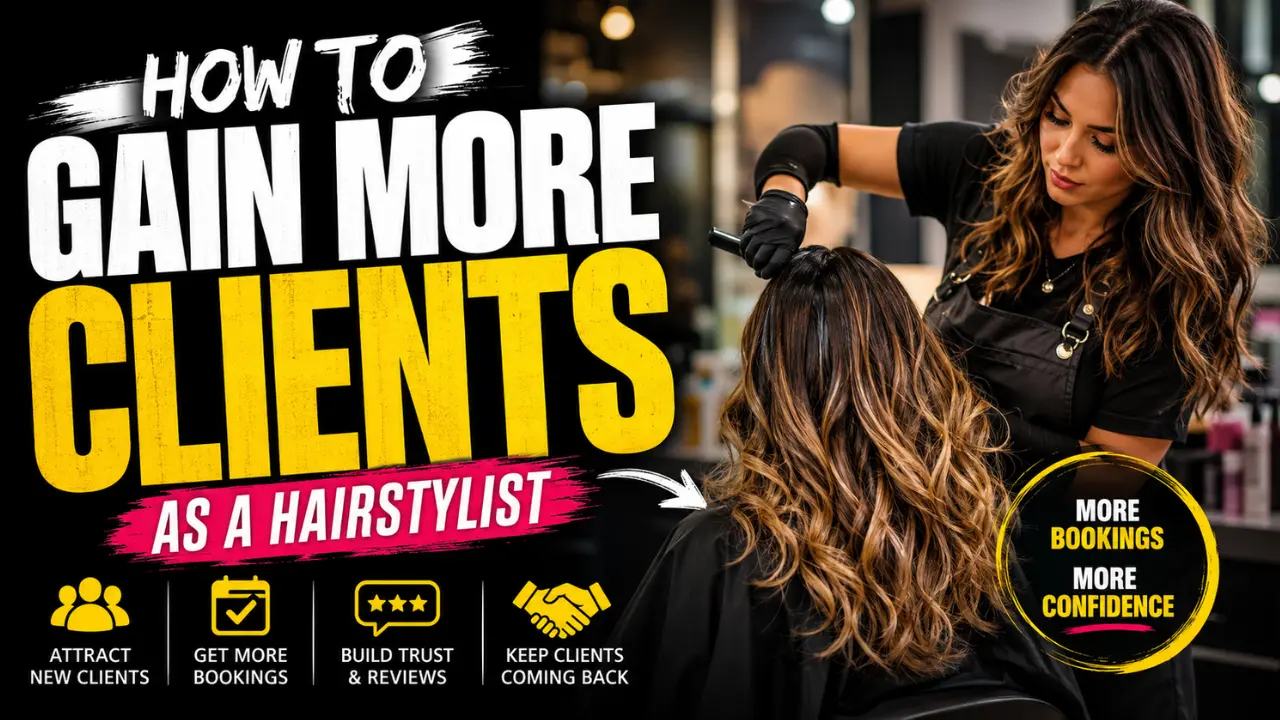

Getting more clients as a hairstylist is not only about posting more photos, lowering prices or waiting for referrals. A hairstylist grows when the right people can find the work, understand the service, trust the result and book without confusion.
Hair is personal. Clients are not only paying for a haircut, colour, silk press, blowout, braids, extensions, treatment or bridal style. They are trusting someone with their appearance, comfort, time, money and confidence.
That is why client growth needs more than visibility. A strong hairstylist business grows through clear positioning, strong portfolio proof, simple booking, professional policies, local presence, reviews, repeat appointments, referrals and a service experience people remember.
Choose What You Want to Be Known For
A hairstylist may offer many services but the public message should not feel scattered. People remember a clear specialty faster than a long list of unrelated services.
This does not mean the stylist must limit the entire business to one service. It means the strongest, most profitable or most desired services should be easier to recognize.
A stylist may want to be known for healthy blonding, lived-in colour, curly cuts, silk press services, bridal styling, extensions, short haircuts, men’s fades, colour correction or low-maintenance hair.
When the message is clear, referrals become easier. A happy client can say, “She is great with curly cuts,” “He does clean fades,” or “She does natural-looking color that grows out beautifully.”
Also Read: HVAC Digital Marketing Service Guide
Understand the Client’s Real Concern
Clients do not usually book only because they see a pretty photo. They book because they believe the stylist can help them reach a result safely, comfortably and professionally.
A colour client may worry about damage, brassiness, maintenance, cost or whether the final result will suit their skin tone. A curly hair client may worry that the stylist will not understand their texture. A bridal client may worry about timing, reliability and whether the style will last through the event.
A hairstylist who understands these concerns can market with more precision. Instead of only saying “appointments available,” the stylist can show that they understand the client’s goal, fear and decision process.
This is where hairstylist marketing becomes stronger. It stops sounding like promotion and starts helping the right client feel understood before booking.
Show real before-and-after results
Before-and-after photos work well because they show the change, not only the finish. A final photo may look polished but the before photo helps people understand the starting point.
For colour, show the original tone, unevenness, previous colour or grown-out roots when possible. For cuts, show shape, movement, length change and how the style frames the face.
For treatments, show shine, texture, softness or manageability. For extensions, show blending, fullness, length and natural movement.
The goal is not to make every result look dramatic. The goal is to show believable proof that the stylist can solve real hair problems.
Organize your work by service
A potential client should not have to scroll through months of mixed content to figure out whether the stylist offers the service they need. A strong portfolio makes the answer obvious.
A stylist can organize work into categories such as balayage, blonding, curly cuts, bridal hair, extensions, silk press, colour corrections, short cuts, men’s grooming or healthy hair treatments.
This helps clients choose faster because they can quickly find proof that matches their goal.
Also Read: Google LSA Guide for HVAC Business Owners
Add context to your captions
A caption should not only say “fresh colour” or “new look.” That may look clean but it does not help the client understand the service.
A better caption explains the client’s starting point, goal, process and maintenance.
For example, instead of only posting a blonde result, the stylist can explain that the client wanted softer grow-out, brightness around the face and a tone that works with their natural base. That kind of caption helps future clients understand what to book and what result is realistic.
Use Social Media to Turn Interest Into Bookings
Social media can help a hairstylist attract new hair clients but only when the content moves people from interest to action. Likes are useful for reach but bookings come from clarity, confidence and timing.
A good hairstylist page should show proof, personality, service clarity and a simple next step. A client should be able to understand what the stylist does well without studying every post.
Every result post should make the service clear. A potential client may love the hair but not know whether it was a gloss, full highlight, balayage, toner, haircut, treatment or extension install. Simple service context turns a pretty post into a booking tool.
Process content can also reduce fear. Many clients are nervous before booking a new stylist because they may have had bad colour, uneven cuts, damaged hair, rushed appointments or poor communication in the past.
A stylist can show consultation notes, sectioning, colour placement, treatment steps, styling methods, product choices or aftercare advice. The goal is to show care and professionalism, not to overwhelm people with technical details.
Social media should also make the next step obvious. A simple line such as “New colour clients should book a consultation first” can guide serious clients without making the page feel sales-heavy.
Make Booking Simple and Clear
A client can like a hairstylist’s work and still fail to book if the process feels confusing. This is one of the most common ways stylists lose potential clients.
The booking process should quickly answer what services are available, where the stylist is located, how pricing works, whether a consultation is required, what times are open and how to book.
A clear booking system protects both sides. It reduces wrong appointments, unclear expectations, pricing surprises and long message threads that never turn into bookings.
Make the booking path visible
The client should not have to search for the booking link. It should be easy to find on the social bio, website, Google profile, pinned posts and any major platform where the stylist gets attention.
If the stylist uses direct messages, the response process should be organized. If the stylist uses online booking, service names and descriptions should be clear enough for a new client to choose correctly.
Also Read: Is Your Business Invisible on Google? Here’s the Fix
Explain services in client language
Service names should not only make sense to stylists. They should make sense to clients.
A new client may not know the difference between partial highlights, full highlights, balayage, gloss, toner, root melt, colour correction or maintenance colour. Short descriptions help prevent confusion.
For example, a service description can say:
“Best for clients who want brightness around the face and top sections without a full blonding session.”
That kind of explanation helps the client choose with more confidence.
Give enough pricing clarity
Pricing does not always need to be exact for every service. Hair length, density, product use, colour history and final goal can affect timing and cost.
Still, clients need enough clarity to feel safe. Starting prices, consultation requirements and price ranges can reduce uncertainty without locking the stylist into an inaccurate quote.
If a service requires a consultation, explain why. The client should understand that the consultation protects their result, hair health, timing and budget.
Create a New Client Consultation System
A consultation system can help hairstylists gain more clients because it makes the first appointment feel professional before the client even sits down.
Many hair problems happen because the stylist and client are not fully aligned. The client may bring unrealistic inspiration photos, unclear hair history or expectations that do not match their budget, hair condition or appointment time.
A good consultation process prevents avoidable disappointment. It also helps the stylist decide whether the service, timing and client expectations are a good fit.
For bigger services, the stylist can ask for current hair photos, goal photos, hair history, previous chemical services, product use, maintenance expectations, budget comfort and timing needs.
Not every result can happen in one session. A client with dark box dye may not safely become bright blonde immediately. A damaged client may need treatments before a major change. A bridal client may need a trial before the event.
A professional stylist should explain this clearly and kindly. Setting expectations early protects the client, the stylist and the final result.
A consultation is not only about approving or rejecting a service. It is a chance to show expertise. When a stylist explains the process, maintenance, price range and possible limits, the client sees that the stylist is thinking carefully.
Use Clear Policies Without Sounding Harsh
Professional policies help a hairstylist attract better clients because they protect time, reduce confusion and make the business feel organized.
Some stylists avoid clear policies because they fear sounding strict. But unclear rules often create bigger problems: no-shows, late arrivals, unpaid time, wrong bookings, extra guests and last-minute cancellations.
Policies are not about being cold. They are about creating a professional experience for both the stylist and the client.
A hairstylist should clearly explain deposit rules, cancellation windows, late arrival policy, consultation requirements, correction policy, child or guest policy if needed and what happens if the client books the wrong service.
These policies should be visible before booking, not explained only after a problem happens.
A policy feels less harsh when the client understands why it exists. A deposit protects the appointment time. A late arrival policy protects the next client. A consultation requirement protects the result. A correction policy explains how concerns should be handled professionally.
Clients who respect professional boundaries are usually better long-term clients.
Also Read: Google Maps SEO Mistakes That Hurt Store Visits
Strengthen Local Visibility
A hairstylist can have strong work but still struggle if local clients cannot find them. Social media helps but it should not be the only source of discovery.
Many people search locally when they need a stylist. They may search for a hairstylist near them, a colourist in their city, a curly hair stylist nearby, a bridal hairstylist in their area or a salon that offers a specific service.
Local hairstylist marketing helps the stylist appear where people are already looking.
If the stylist has a Google Business Profile, salon profile, booking platform or directory listing, it should be accurate and complete. The profile should show location, hours, service details, contact options, booking link, photos and reviews.
A weak or incomplete profile can make a good stylist look inactive. A complete profile gives nearby clients enough information to take the next step.
A hairstylist should also mention the city, neighbourhood or service area naturally in profiles, captions, website pages and service descriptions.
Examples could include “curly hair stylist in Austin,” “bridal hairstylist in Tampa,” “blonding specialist in Scottsdale,” or “silk press stylist in Atlanta,” depending on the real location and specialty.
Local proof can include client photos, salon location content, local collaborations, bridal venue tags, neighbourhood mentions or event styling. This makes the stylist feel real and reachable, not like a random page with beautiful hair photos but no clear place to book.
Build Trust Through Reviews
Reviews help potential clients feel safer before booking. Hair services can feel risky because clients may worry about damage, poor communication, bad colour, rushed work or a result that does not match what they asked for.
A hairstylist should ask satisfied clients for honest reviews, especially after meaningful services such as colour transformations, corrective work, bridal trials, extensions or major cuts.
The strongest reviews mention specific details. They may say the stylist listened carefully, explained the process, fixed a colour issue, protected hair health, gave styling advice or made the client feel comfortable.
A review that says “she explained everything and fixed my colour without damaging my hair” can be more persuasive than a simple five-star rating with no detail.
Improve the Appointment Experience
Marketing brings people in but the appointment experience decides whether they come back. A hairstylist can gain more clients by making each appointment feel organized, respectful and worth the price.
The experience begins before the service starts. Clients notice whether the stylist is prepared, on time, calm, clean, attentive and clear about what will happen.
Clients want expertise but they also want to feel heard. A stylist should ask what the client likes, dislikes, struggles with and hopes to change. After listening, the stylist can give professional guidance.
Some clients ask for results that may not suit their hair condition, budget, maintenance habits or time frame. A good stylist does not simply agree to everything. The stylist should explain what is realistic and offer a better path when needed.
A client may love the salon result but struggle to recreate it at home. Showing a simple brush technique, product amount, drying method, curl refresh step or heat setting can make the appointment more valuable.
Clients return to stylists who make them feel capable, not confused.
Also Read: How Paid Visibility Works on Google Search
Turn First-Time Clients Into Returning Clients
A hairstylist does not grow only by attracting new clients. Growth becomes easier when first-time clients return.
Returning clients create a more stable calendar. They also refer others, leave reviews, buy products, book maintenance and trust the stylist with future changes.
Rebooking should feel like part of proper hair care, not pressure. If a client needs a trim in eight weeks, toner in six weeks, root touch-up in four weeks or extension maintenance on a schedule, the stylist should explain that clearly.
A simple sentence can help:
“To keep this colour fresh, I would recommend booking your gloss in about six to eight weeks.”
This gives the client a plan and helps the stylist protect future income.
Clients also remember stylists who help them maintain the result at home. Aftercare can include washing advice, heat styling limits, product recommendations, brushing methods, sleeping care, curl refresh tips or colour protection guidance.
For colour correction, extensions, bridal trials or major transformations, a short follow-up message can make a strong impression. The stylist can ask how the hair is feeling, whether the client has questions or whether they need help with aftercare.
Create Offers That Support Long-Term Growth
Discounts can bring attention but constant discounting can attract price-focused clients who may not stay.
A better offer should support the stylist’s long-term business. It should make booking easier without lowering the perceived value of the service.
Examples include:
- New client consultation package
- Seasonal treatment add-on
- Bridal trial package
- Color maintenance refresh
- Extension consultation and care plan
- Referral reward
- Product education session
- Returning client refresh package
The right offer depends on the stylist’s specialty. A blonding stylist may promote gloss and treatment refreshes. A curly stylist may offer a new client curl consultation. A bridal stylist may package trials and wedding-day styling.
The offer should guide the right client toward the right service.
Collaborate With Local Businesses
Local collaborations can help hairstylists reach new clients without relying only on social media algorithms.
A bridal stylist can connect with makeup artists, photographers, wedding planners, boutiques and venues. A colour specialist can collaborate with branding photographers, beauty professionals or local influencers. A stylist focused on healthy hair can connect with skincare, wellness or beauty businesses.
The best collaborations are natural. They should reach people who are likely to need the stylist’s services.
A random collaboration may bring attention but a relevant collaboration can bring better clients.
Track Where Clients Come From
A hairstylist should know which efforts actually bring clients. Without tracking, it is easy to keep posting, discounting or advertising without knowing what is working.
The stylist can ask every new client:
“How did you find me?”
The answers may reveal patterns. Some clients may come from Instagram, Google, referrals, salon walk-ins, local groups, bridal vendors, TikTok or existing clients.
Tracking helps the stylist decide where to spend more effort. If referrals bring the best clients, strengthen the referral system. If Google brings local bookings, improve the profile. If social media gets attention but few bookings, the booking process may need to be clearer.
