
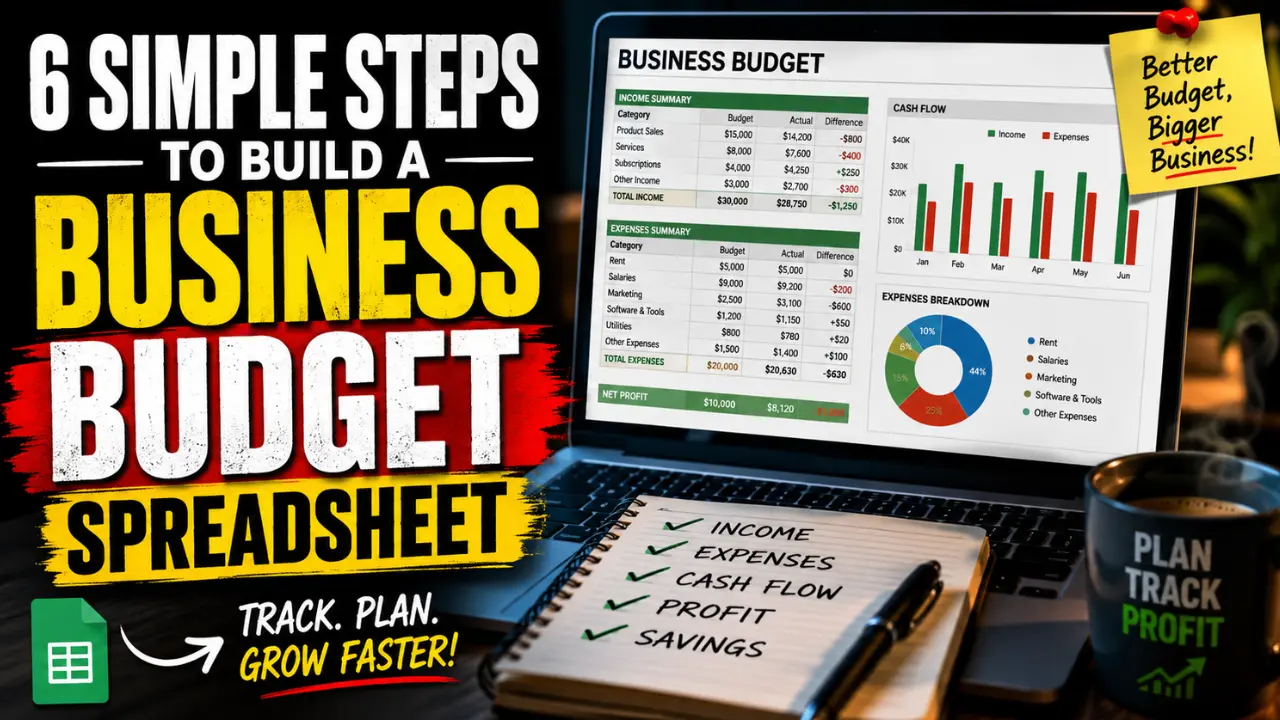

Most small businesses do not struggle because owners lack effort or ideas. Many struggle because money moves through the business without enough visibility into what is happening underneath the surface. Sales may come in regularly, customers may continue buying and the bank account may look acceptable, yet the business can still become unstable because expenses, taxes, advertising costs, subscriptions and cash flow pressure quietly grow over time.
This is why a proper business budget spreadsheet matters. A good spreadsheet does not only track numbers. It helps business owners understand where money comes from, where it disappears, which activities are profitable, which costs are rising too quickly and whether the business is becoming financially stronger or only becoming busier.
Many owners delay budgeting because they assume spreadsheets require accounting expertise. In reality, the most useful business budget spreadsheets are often simple systems updated consistently. The goal is not creating a complex corporate finance document. The goal is building a practical financial dashboard that supports better monthly decisions, much like [how cash flow visibility helps small businesses identify financial pressure before it becomes a serious operational problem — Why Cash Flow Management Matters for Small Businesses].
Sample Spreadsheet Layout
Before adding numbers, it helps to create a clean spreadsheet structure. Many small businesses fail at budgeting not because the owner cannot understand numbers but because the spreadsheet becomes confusing after a few months. A clear layout makes the budget easier to update, compare and review.
A simple small business budget spreadsheet can be built with one main monthly sheet or separate tabs for income, expenses, cash flow and yearly summary. For most small businesses, one well-organized monthly sheet is enough in the beginning.
A practical layout may look like this:
| Month | Category | Type | Projected Amount | Actual Amount | Difference | Notes |
|---|---|---|---|---|---|---|
| January | Website Sales | Income | $5,000 | $4,650 | -$350 | Slower than expected |
| January | Client Retainer | Income | $2,000 | $2,000 | $0 | Stable recurring income |
| January | Rent | Fixed Expense | $1,200 | $1,200 | $0 | Monthly fixed cost |
| January | Google Ads | Variable Expense | $800 | $950 | +$150 | CPC increased |
| January | Shipping | Variable Expense | $400 | $520 | +$120 | More orders than planned |
| January | Tax Reserve | Reserve | $700 | $700 | $0 | Protected for taxes |
| January | Emergency Savings | Reserve | $300 | $300 | $0 | Monthly reserve |
This kind of layout immediately shows where projections and reality begin separating. The “Projected Amount” column shows what the business expected. The “Actual Amount” column shows what really happened. The “Difference” column shows whether income fell short, expenses went over budget or the month performed better than expected.
The notes column is also useful because numbers alone do not always explain the reason behind a change. A higher advertising cost may be acceptable if it produced better customers. A lower revenue month may be normal after a seasonal rush. Notes help the business remember context instead of judging numbers blindly later.
Most small businesses benefit from updating the spreadsheet weekly and reviewing it more deeply at the end of each month. Weekly updates keep records clean, while monthly reviews reveal bigger patterns.
1. Separate Income Categories
The first step is separating income into meaningful categories instead of placing all revenue into one large total. A single revenue number may look organized but it hides important financial patterns. Different income streams behave differently and the business owner needs to understand which income is dependable, which is seasonal and which is unpredictable.
For example, a service business may separate recurring clients, one-time projects, consultations, retainers and referral income. An ecommerce business may separate direct website sales, marketplace sales, subscriptions, wholesale orders and seasonal promotions. This structure creates visibility into which parts of the business are truly supporting long-term stability.
Revenue Stability Matters
Recurring income creates a safer planning environment because the business can forecast future months more confidently. A company with stable monthly retainers or subscriptions operates differently from a company depending heavily on promotional spikes or occasional large projects.
This matters because permanent expenses should never be built on temporary revenue patterns. A business that experiences one unusually strong month may feel confident increasing payroll, software subscriptions, advertising budgets or inventory purchases too quickly. If the next month slows down, those new expenses remain while the revenue disappears.
A spreadsheet helps reveal whether growth is stable or only temporary excitement, especially when owners begin tracking [which income streams actually create predictable long-term business stability — How to Identify Reliable Revenue Streams in a Small Business].
Monitor Expected vs Actual Revenue
A strong budget spreadsheet should compare projected revenue with actual revenue every month. For each income category, include projected income, actual income and the difference between the two.
This helps businesses understand whether forecasting is realistic or emotionally optimistic. Many owners accidentally budget around hope instead of evidence. After several months, the spreadsheet begins showing which revenue expectations are consistently inaccurate and which categories behave predictably. That improves future planning because the business starts making decisions using real patterns instead of assumptions.
2. Separate Fixed Expenses Properly
The second step is building a detailed fixed expense section. Fixed expenses are the recurring costs the business pays regularly regardless of whether sales increase or decrease. These expenses create the financial baseline of the company, so they should never remain hidden inside vague categories.
Common fixed expenses include rent, payroll, insurance, hosting, bookkeeping, accounting software, internet, CRM tools, phone bills, email platforms and recurring software subscriptions. When these costs are listed clearly together, the owner can immediately see how much revenue is already committed before spending on marketing, inventory or growth.
Small Costs Quietly Reduce Profit
Modern businesses often accumulate subscriptions gradually over time. An SEO tool, scheduling platform, automation system, analytics software, AI subscription, project management app and email platform may each seem affordable individually. Together, they can quietly become a major monthly expense.
The danger is that subscriptions rarely feel urgent because they renew automatically in the background. A spreadsheet exposes the real combined monthly and annual cost clearly, making it easier to identify unused tools, overlapping services, unnecessary upgrades or subscriptions producing little business value.
Divide Necessary and Optional Costs
Not every recurring expense is equally important. Some expenses are operationally essential because the business cannot function properly without them. Others are useful but optional.
Separating these categories gives the business flexibility during slower periods. If revenue temporarily weakens, the owner can quickly identify which costs can be reduced without damaging core operations. This prevents emotional panic cutting and creates a calmer financial environment during unstable months.
3. Track Variable Costs Separately
The third step is creating a separate variable expense section. Variable expenses rise and fall depending on business activity, customer demand, marketing intensity or fullfillment needs.
These expenses may include advertising, shipping, packaging, commissions, contractor payments, inventory purchases, payment processing fees, production costs and refunds. Tracking them separately is extremely important because businesses often increase revenue while failing to notice that operational costs are increasing almost as quickly.
Revenue Growth Can Be Misleading
A business can become busier while becoming less profitable. This is one of the most dangerous financial illusions in small business growth.
For example, an ecommerce store may double sales during a major promotion but advertising costs, discounts, shipping fees, packaging, returns and transaction fees may also rise sharply. A service business may gain more clients but need additional freelancers, software, support time and revisions to handle the workload.
From the outside, growth looks exciting because activity increases. Internally, actual retained profit may improve very little. Without separating variable costs clearly, many businesses mistake movement for financial progress, especially when they are not closely monitoring [how rising operational costs quietly reduce real business profit margins — Why Revenue Growth Does Not Always Increase Profit].
Separate Advertising Spend Clearly
Advertising should always have a dedicated section inside the spreadsheet because it often becomes one of the fastest-changing business expenses.
This may include Google Ads, Meta Ads, influencer campaigns, SEO content, agency retainers, email marketing and promotional discounts. The goal is not simply tracking spending. The goal is understanding whether customer acquisition remains profitable over time.
Many businesses continue increasing ad budgets because clicks, traffic or leads are rising while actual profitability quietly weakens underneath. A spreadsheet helps reveal this earlier before the business scales inefficient spending.
4. Track Real Cash Flow Clearly
The fourth step is building a proper cash flow section. This is where many businesses become financially stressed even when revenue looks healthy.
Profit and cash flow are not the same thing. A business may technically be profitable while still struggling financially because money enters and leaves at different times. Clients may delay invoice payments, inventory may require large upfront purchases, taxes may arrive suddenly or annual software renewals may create temporary pressure.
A strong spreadsheet should therefore track incoming cash, outgoing cash, payment timing and remaining cash balance monthly. This helps the owner see not only whether the business made money but whether enough cash is available when bills are due.
Poor Cash Flow Hurts Healthy Businesses
Many businesses with strong products or services still experience financial stress because timing problems create pressure.
An agency may finish projects successfully but wait weeks for payment. A contractor may buy materials before receiving customer funds. An ecommerce business may purchase inventory long before seasonal demand arrives.
Without cash flow visibility, these timing gaps become stressful because the owner reacts only after cash becomes tight. A spreadsheet helps identify these problems earlier so the business can prepare instead of panic.
Include Tax Reserves in Budgeting
Taxes are one of the most ignored areas in small business budgeting.
Many owners accidentally treat gross revenue like usable cash and spend aggressively without separating tax obligations properly. Later, tax deadlines arrive and create pressure because the money was already used elsewhere.
A dedicated tax reserve section creates healthier discipline. Even a simple monthly percentage estimate helps separate operating money from future tax obligations. That separation reduces unpleasant surprises significantly.
5. Review Monthly Budget Accuracy
The fifth step is reviewing the spreadsheet consistently. A budget spreadsheet becomes valuable only when projections are compared against real results every month.
Each month, compare projected revenue, actual revenue, projected expenses, actual expenses, expected profit and actual profit. This reveals patterns that daily business activity often hides. The spreadsheet may show that one revenue source is weakening, operational costs are slowly rising, advertising is becoming less efficient or cash flow pressure is increasing even while sales appear healthy.
Better Tracking Improves Decisions
Businesses operating without financial visibility often make emotional decisions.
During strong months, owners may overspend, hire too early, increase advertising aggressively or assume growth will continue automatically. During weaker months, they may panic, reduce useful investments or make reactive decisions that damage long-term stability.
A spreadsheet creates context. It helps the business understand whether a problem is temporary or repeated, whether growth is profitable or expensive and whether financial decisions are supported by real numbers instead of emotion.
Monthly Trends Give Better Insight
One strong month does not always justify expansion. One weak month does not automatically mean failure.
The better question is what the trend shows over time. Are advertising costs rising faster than revenue? Is recurring income becoming stronger? Are operational costs slowly expanding? Are refunds increasing? Is cash flow improving or weakening?
These long-term patterns create far better business decisions than reacting emotionally to isolated monthly fluctuations.
6. Build Profit and Savings Sections
The sixth step is adding sections for retained profit, savings, emergency reserves and reinvestment funds. Many businesses track income and expenses but forget to protect money for long-term stability.
This creates dangerous situations where one weak sales month, delayed customer payments, refund spikes, equipment problems, supplier issues or advertising failures can suddenly create financial stress.
A strong spreadsheet should separate operating money, owner compensation, emergency savings, reinvestment funds and taxes. This does not need to be complicated but it should be visible enough that the owner knows which money is actually available and which money should be protected.
Profit Should Be Managed Deliberately
One of the biggest small business mistakes is allowing every dollar earned to flow back into operations automatically.
Growth investment is important but uncontrolled reinvestment often leaves businesses generating activity without building financial strength underneath. The owner stays busy, revenue moves constantly but little real stability is being created.
A spreadsheet should clearly show how much profit is actually being retained after expenses. This helps the business decide how much can safely be reinvested, how much should remain protected and whether growth is genuinely improving financial health.
Emergency Funds Create Stability
Unexpected costs are normal in business. Equipment fails, invoices get delayed, suppliers raise prices, advertising performance changes or seasonal slowdowns happen unexpectedly.
Without reserves, every problem feels urgent.
Even a modest reserve fund changes business psychology because the company gains breathing room during difficult periods. Instead of making decisions from panic, the business can respond strategically. Financial stability is not only about earning more money. It is also about surviving difficult periods without losing control.
Importance of Budget Tracking
A small business budget spreadsheet is not simply a financial document. It is a decision-making system that helps owners understand whether the business is becoming healthier or only becoming busier.
Revenue alone does not tell the full story. A business can grow sales while shrinking margins, increasing stress and creating cash flow problems underneath the surface.
A strong spreadsheet reveals which income sources are stable, which expenses are growing too quickly, whether marketing is profitable, whether cash flow remains healthy and whether the business is building enough financial protection for the future.
Without this visibility, many owners manage the business using only the bank balance. That approach is dangerous because the bank balance does not show unpaid taxes, upcoming bills, delayed invoices or weakening profit margins.
That is why even a simple business budget spreadsheet can become one of the most valuable tools a small business creates early. It transforms scattered financial activity into financial clarity and financial clarity almost always leads to smarter long-term business decisions.
Frequently Asked Questions
What should a small business budget spreadsheet include?
A small business budget spreadsheet should include income categories, fixed expenses, variable expenses, cash flow tracking, tax reserves, savings and profit sections. It should also compare projected numbers against actual monthly performance.
What is the difference between fixed and variable expenses?
Fixed expenses usually stay consistent every month, such as rent or payroll. Variable expenses change depending on business activity, including advertising, shipping, inventory and commissions.
Can I create a business budget spreadsheet without accounting software?
Yes. Many small businesses begin with simple spreadsheets using tools like Google Sheets or Excel. A well-organized spreadsheet is often enough for budgeting and financial visibility in the early stages.
How does a budget spreadsheet improve business decisions?
A budget spreadsheet reveals financial patterns that are difficult to notice during daily operations. It helps businesses control expenses, monitor profitability, prepare for taxes and make calmer long-term decisions.
